HomeAbout
Services
General PhysiotherapySports PhysiotherapyExercise RehabilitationDry NeedlingRemedial Massage
FeesContact
Book OnlineCall 08 6113 8062
Knee Injuries
★★★★★4.9 · 434 Google Reviews

Knee Pain Treatment in Perth

From acute sports knee injuries to long-standing knee pain — accurate diagnosis and rehabilitation that actually solves the problem.

Knee Injuries

Knee Pain Treatment in Perth

Knee pain is one of the most common presentations in physiotherapy, encompassing a wide spectrum of conditions — from acute traumatic injuries (ACL tears, meniscus injuries) to chronic overuse conditions (patellofemoral pain, tendinopathy) and degenerative conditions (osteoarthritis).

Accurate diagnosis is essential because the treatment approach differs substantially between conditions. A knee that is painful from an acutely torn ACL requires a completely different management approach to one with patellofemoral pain syndrome or knee osteoarthritis.

At Move Physiotherapy, we combine detailed clinical assessment with VALD force measurement technology to quantify quadriceps and hamstring strength — the most important modifiable factors in knee pain and injury risk.

🛡️
Satisfaction Guarantee
Have we met your expectations? If not, we will refund your out-of-pocket expense — no questions asked.
Knee Injuries
Knee Injuries
🛡️
Satisfaction Guarantee
Have we met your expectations? If not, we will refund your out-of-pocket expense — no questions asked.
VALD Technology

Technology-Based
Injury Assessment

Included gap-free with every initial assessment.

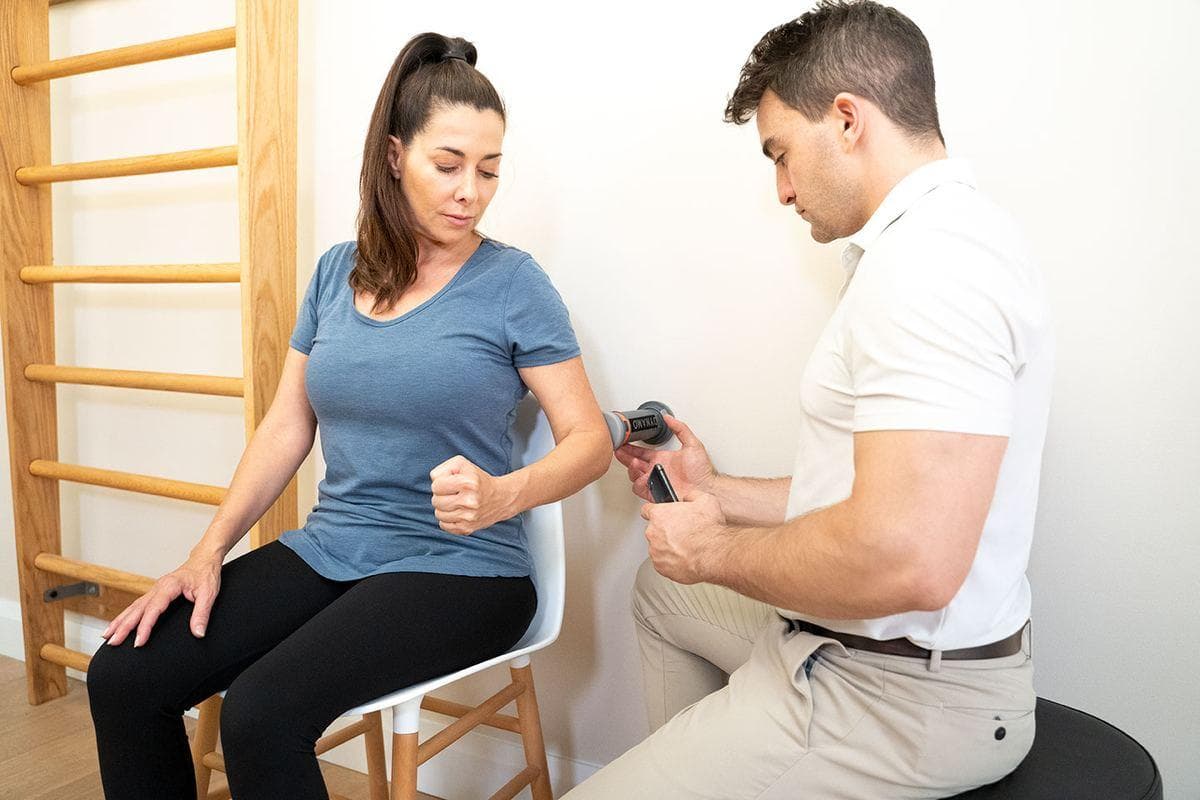
Move Physiotherapy uses VALD force measurement technology — the same systems used by AFL, NRL and Olympic programs — to objectively measure your strength, symmetry and recovery. This means your physiotherapist can track your progress with clinical precision, making data-driven decisions at every stage of your rehabilitation rather than relying on subjective estimates.

Learn more about VALD technology →
📊
Limb Symmetry Index (LSI)
Track strength symmetry between limbs objectively — the key metric for safe return to activity.
🏋️
Force Plate Testing
Measure landing mechanics, single-leg stability, and explosive power with real data.
Objective Stage Gates
Technology removes subjectivity from progression decisions — you advance when the numbers confirm readiness.
VALD technology assessment at Move Physiotherapy

Gap-free with every initial assessment

Technology-based assessment is included as standard — no additional out-of-pocket cost.
Causes

Common Knee Injuries & Conditions

ACL tear — ligament rupture from pivoting, landing, or contact injury
Meniscus tear — acute (twisting injury) or degenerative
Patellofemoral pain syndrome — anterior knee pain from altered patellar tracking
Patellar tendinopathy — overuse tendon pain in jumping athletes
MCL/LCL sprain — contact or valgus/varus force injury
Iliotibial band syndrome — lateral knee pain in runners
Knee osteoarthritis — degenerative joint disease
Bursitis — prepatellar or pes anserine bursa inflammation

Our Approach

The Move Process

01
Diagnostic Assessment
Identify the specific structure(s) involved — ligament, meniscus, tendon, or joint — using clinical examination and imaging where indicated.
02
Reduce Pain & Swelling
Manual therapy, taping, bracing advice, and load management to reduce pain and acute inflammation, creating the foundation for rehabilitation.
03
Quadriceps & Hamstring Rehabilitation
Progressive strengthening targeting the specific deficits identified by VALD testing. Symmetry criteria must be met before advancing to higher-demand activities.
04
Return to Activity
Sport or activity-specific loading, plyometric training, and criteria-based return — verified by objective strength and movement testing.

Why Move Physiotherapy

What sets us apart

Diagnostic Accuracy
Correct diagnosis before commencing treatment is the single most important factor in outcome — we invest the time to get it right.
Objective Strength Testing
We quantify quadriceps and hamstring strength at baseline and throughout rehabilitation, ensuring criteria are met before return to demanding activities.
Satisfaction Guarantee
Have we met your expectations? If not, we will refund your out-of-pocket expense — no questions asked.

Common Questions

Frequently Asked Questions

How do I know if I have torn my ACL?+
Common signs of ACL rupture include: a pop heard or felt at the time of injury, rapid knee swelling within 2 hours (haemarthrosis), significant instability or giving-way, and inability to continue playing. However, clinical assessment and MRI are required for definitive diagnosis.
Do I need surgery for my knee?+
The majority of knee conditions do not require surgery. Even ACL rupture can be managed successfully without reconstruction in certain populations. The decision requires a thorough discussion with your physiotherapist and orthopaedic specialist.
How long does knee rehabilitation take?+
It depends on the diagnosis. Patellofemoral pain: 6-12 weeks. Mild MCL sprain: 4-8 weeks. Meniscus tear (conservative): 6-12 weeks. Patellar tendinopathy: 3-6 months. ACL reconstruction: 9-12 months to return to contact sport with criterion-based testing.
Can I run with knee pain?+
It depends on the cause. Some conditions — like mild patellofemoral pain — can be managed while maintaining modified running. Others — like an acute ligament tear — require a period off running. Your physiotherapist will advise based on diagnosis and severity.
What is the best exercise for knee pain?+
The evidence consistently supports strengthening exercise — particularly quadriceps and hip strengthening — as the most effective intervention for most knee conditions. Specific exercise selection should be tailored to your diagnosis, stage of recovery, and current capacity.

Ready to get moving?

Beeliar, Booragoon and East Fremantle -- early morning, evening and Saturday appointments available.