HomeAbout
Services
General PhysiotherapySports PhysiotherapyExercise RehabilitationDry NeedlingRemedial MassageMedicare / EPCWorkCover & ICWADVA Physiotherapy
ConditionsFeesContact
Book OnlineCall 08 6113 8062
★★★★★4.9 · 381 Google Reviews

Expert Physiotherapy for ACL Injuries

Criterion-based, 5-stage rehabilitation that gets athletes back to sport safely -- with objective testing at every stage, not guesswork.

ACL Injuries

Expert Physiotherapy for ACL Injuries

ACL injuries are among the most serious an athlete can face -- yet ACL rehabilitation is also one of the most commonly mismanaged. Research shows that non-elite athletes receive evidence-based ACL rehab as little as 5% of the time. The result: only 40--55% of athletes return to competitive sport after ACL injury, despite 94% expecting to.

The consequences of inadequate rehabilitation are significant. Athletes who return to pivoting sports within 9 months of reconstruction face a re-injury rate of up to 40%. A second ACL tear carries a substantially higher risk of early-onset knee osteoarthritis, and in younger athletes (under 25), the re-injury rate can be as high as 30-40%. Rushing rehabilitation -- or using time-based milestones rather than objective criteria -- is the primary driver of this re-injury epidemic.

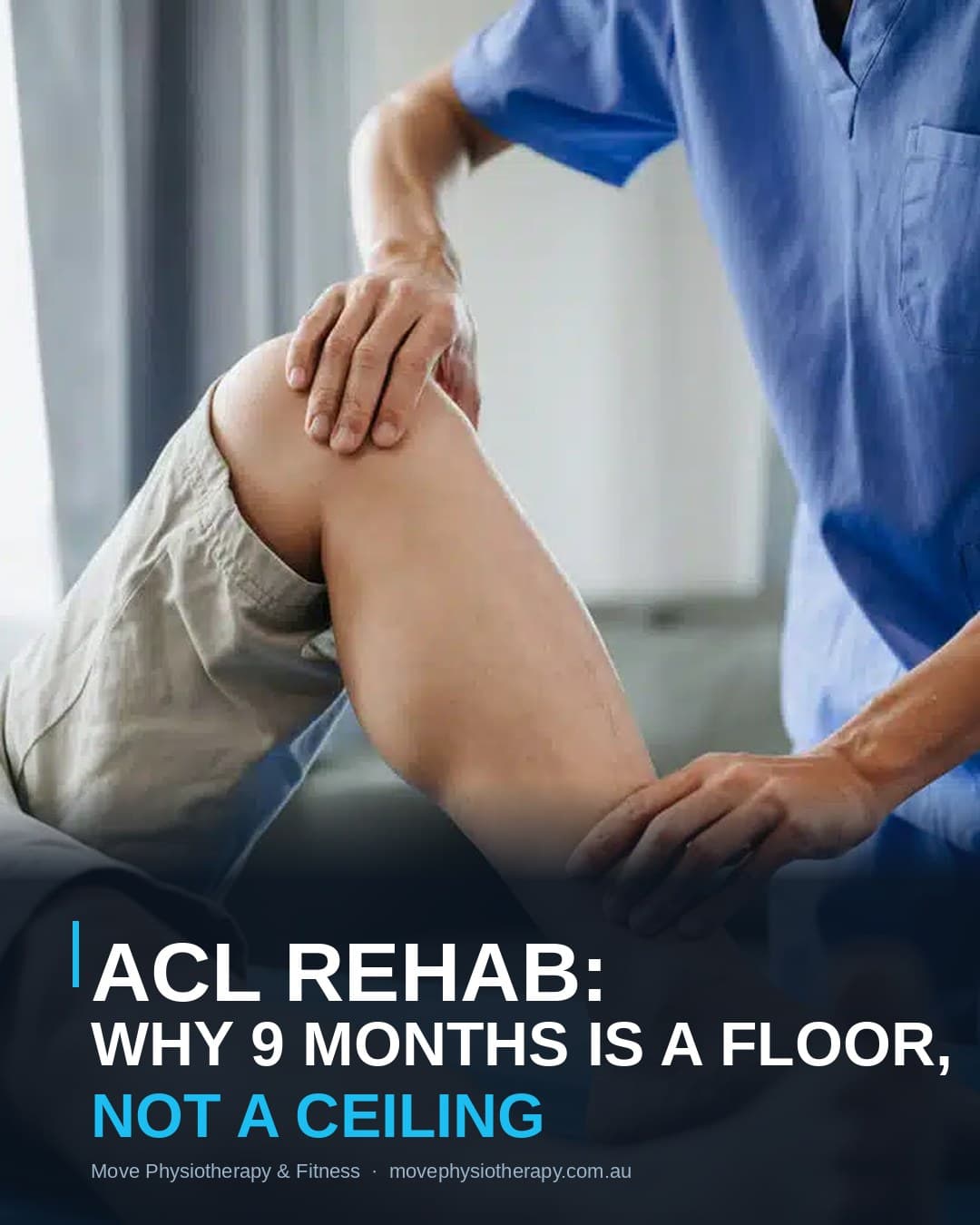
At Move Physiotherapy, we follow a criterion-based 5-stage rehabilitation protocol built on the best available research, including the Melbourne ACL Rehabilitation Guide. Each stage has clear exit criteria based on objective strength testing, movement quality, and functional benchmarks. You move forward when your body is ready -- not when the calendar says so. When you return to sport, it is with data-confirmed readiness and the lowest possible re-injury risk.

ACL Injuries
ACL Injuries
VALD · AxIT Systems

Technology-Based
Injury Assessment

Included gap-free with every initial assessment.

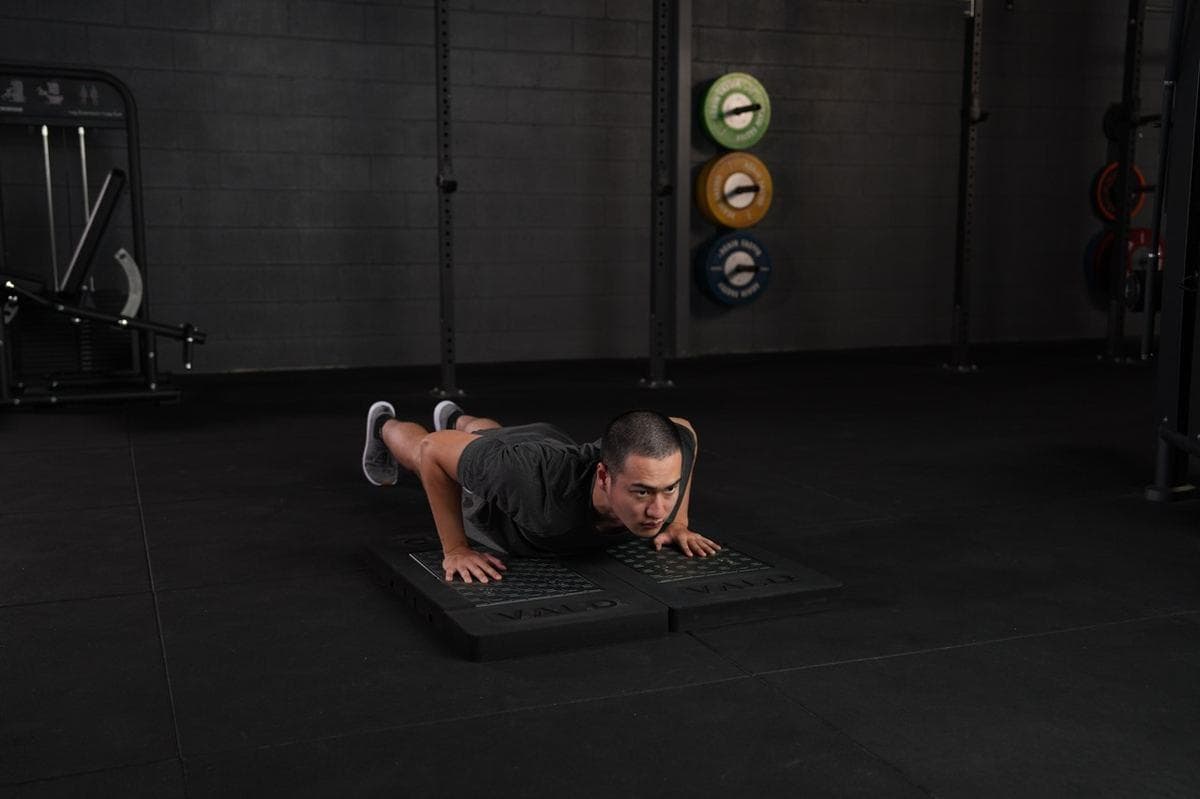
Move Physiotherapy uses VALD and AxIT force measurement technology -- the same systems used by AFL, NRL and Olympic programs -- to objectively measure your strength, symmetry and recovery. For ACL rehabilitation, this means we can track your limb symmetry index (LSI) with precision at every stage, giving you and your physio real data to guide progression decisions -- not estimates.

📊
Limb Symmetry Index (LSI)
Track quad and hamstring strength symmetry between legs -- the key metric for ACL return-to-sport clearance.
🏋️
Force Plate Testing
Measure landing mechanics, single-leg stability, and explosive power with objective data.
Criteria-Based Stage Gates
Technology removes subjectivity -- you progress when the numbers confirm readiness, every time.
VALD technology-based assessment at Move Physiotherapy

Gap-free with every initial assessment

Technology-based assessment is included as standard -- no additional out-of-pocket cost.

Our Approach

The Move Process
01
Acute & Post-Op Management
Swelling control, restoration of full knee extension, early quadriceps activation, and protected weight-bearing. Progression is criteria-driven -- not time-based. Targets include full extension, minimal effusion, and quad activation before advancing.
02
Neuromuscular Control & Strength
Progressive quad, hamstring, and gluteal loading targeting limb symmetry index (LSI) ≥70%. Proprioception and gait retraining, closed-chain exercise, and single-leg stability work. Exit criteria include LSI ≥70% on objective dynamometry.
03
Running & Loading Progression
Return to running only once strength criteria are confirmed. Structured running volume progression combined with continued strength loading. Straight-line speed development and impact loading preparation. Exit criteria include symptom-free running and LSI ≥80%.
04
Sport-Specific & Agility Training
Change-of-direction drills, deceleration training, reactive agility, and sport-specific skill work. LSI ≥90% on quad and hamstring dynamometry required to enter this stage. Psychological readiness assessed using the ACL-RSI scale.
05
Return to Sport Clearance
Full hop test battery (single-leg, triple, crossover, 6m timed hop) with LSI ≥90%, objective dynamometer testing, drop-jump landing assessment, ACL-RSI score ≥65, and minimum 9 months post-surgery. Clearance is only given when all criteria are met.

Why Move Physiotherapy

What sets us apart

Melbourne ACL Protocol
We use the Melbourne ACL Rehabilitation Guide -- the gold-standard criterion-based framework validated in elite and community sport globally. Every stage gate is backed by peer-reviewed research.
Objective Strength Testing
VALD and AxIT dynamometers measure quadriceps and hamstring strength with clinical precision. Limb Symmetry Index is tracked throughout -- giving you real numbers, not estimates, at every stage gate.
Criterion-Based Progression
You advance through each stage when your body qualifies -- not when a fixed number of weeks has passed. This is the single most important factor in reducing re-injury risk and improving return-to-sport outcomes.
Surgical & Conservative Pathways
We manage both ACL reconstruction and non-surgical (conservative) rehabilitation. For those weighing up surgery, we coordinate closely with your orthopaedic surgeon to align timelines and expectations.
Pre-Operative Rehabilitation
Research consistently shows that pre-operative "prehab" -- maximising strength and range of motion before surgery -- significantly improves post-operative outcomes. We build this into every surgical pathway.
Re-Injury Prevention Focus
Athletes who pass a full criteria-based return-to-sport battery have a 72% lower re-injury risk (Kyritsis et al., 2016). Every element of our protocol is designed around this evidence.
Psychological Readiness Assessment
Fear of re-injury is one of the strongest predictors of failure to return to sport. We formally assess psychological readiness using the ACL-RSI scale and address it as a core part of the program -- not an afterthought.
Elite Sport Experience
Our team has managed ACL rehabilitation at state, national, and international competition level across AFL, soccer, basketball, netball, and athletics. That experience informs every community athlete we treat.

Common Questions

Frequently Asked Questions

Do I need surgery for an ACL tear?+
Not necessarily. The decision between surgical reconstruction and conservative (non-surgical) management depends on several factors: your sporting goals, the degree of knee instability, and whether there is concurrent damage to the meniscus or articular cartilage. The landmark KANON randomised controlled trial (Frobell et al., 2013) found no significant difference in outcomes at 5 years between early reconstruction and a strategy of structured rehabilitation with optional delayed reconstruction. Non-surgical management is particularly appropriate for older or less active individuals, those with isolated ACL tears, and athletes willing to accept some restriction in high-demand pivoting sports. For competitive athletes aiming to return to cutting and pivoting sports at the same level, reconstruction remains the most common recommendation. Critically, even if you choose surgery, a period of pre-operative rehabilitation ("prehab") -- aimed at restoring full range of motion and maximising strength before the operation -- significantly improves post-surgical outcomes and should not be skipped.
How long does ACL rehabilitation take?+
A minimum of 9--12 months from injury or surgery is the current evidence-based recommendation for return to competitive sport. This is not arbitrary. Research by Grindem et al. (2016) found that for every month of delay in return to sport beyond 9 months, re-injury risk decreased by approximately 51%. Athletes who return at 6 months have roughly 4 times the re-injury rate of those who return at 9 months -- even if they appear clinically ready. Timeline and criteria should both be satisfied: returning at 9 months having passed all objective benchmarks is the current best-practice standard. Rushing this process -- motivated by external pressure, competition schedules, or impatience -- is the most common and consequential mistake in ACL rehabilitation.
What is a hamstring graft vs a patellar tendon graft?+
These are the two most common autograft sources used in ACL reconstruction. The patellar tendon (bone-tendon-bone, or BTB) graft uses the central third of the patellar tendon with bone plugs, offering excellent mechanical fixation and historically strong outcomes in high-demand athletes. The trade-off is a higher incidence of anterior knee pain, patellar tendinopathy, and kneeling discomfort post-operatively, as well as a greater rehabilitation focus on restoring patellar mobility and managing patellofemoral pain. The hamstring graft (typically semitendinosus and gracilis) produces less donor-site morbidity at the front of the knee, but the graft undergoes a longer biological maturation process called "ligamentisation" -- taking up to 2 years to fully incorporate -- which has significant implications for return-to-sport timelines. Hamstring rehabilitation must also account for the reduction in hamstring strength from graft harvest, making hamstring-to-quad ratio restoration a critical metric. Your surgeon will recommend the most appropriate option based on your anatomy, sport demands, age, and individual risk profile.
What is the re-injury risk after returning to sport?+
Higher than most athletes expect. Population-level studies report a 15--25% re-injury rate within 5 years following ACL reconstruction in athletes who return to pivoting sports. In young athletes under 25, rates of combined ipsilateral and contralateral ACL injury can approach 30--40%. The most important protective factor is the quality and completeness of rehabilitation. Kyritsis et al. (2016) demonstrated that athletes who passed all return-to-sport criteria had a 72% lower re-injury risk than those who did not -- a striking finding that underscores why criteria-based clearance is non-negotiable. Time alone is insufficient; meeting objective benchmarks for strength, hop symmetry, movement quality, and psychological readiness is what actually reduces risk.
What are the criteria to return to sport?+
Current best-practice return-to-sport criteria include: (1) Limb Symmetry Index (LSI) ≥90% for quadriceps and hamstring strength as measured by isokinetic or handheld dynamometry; (2) Passing a full hop test battery -- single-leg hop, triple hop, triple crossover hop, and 6-metre timed hop -- each with LSI ≥90%; (3) Satisfactory movement quality on single-leg squat and drop-jump landing assessment; (4) Psychological readiness score ≥65 on the ACL-RSI (Return to Sport after Injury) scale -- fear of re-injury is a major barrier to successful return and must be formally addressed; and (5) A minimum of 9 months post-surgery. At Move Physiotherapy, we use VALD dynamometry and AxIT force platforms to measure these criteria objectively. Clearance is only given when all criteria are satisfied.
What is criterion-based vs time-based ACL rehabilitation?+
Time-based rehabilitation uses fixed calendar milestones as the primary driver -- "return to running at 12 weeks," "return to sport at 6 months." This approach remains common in many non-specialist settings and is a primary reason ACL outcomes in community sport remain poor. Criterion-based rehabilitation uses objective benchmarks at each stage gate: strength symmetry ratios, hop test performance, movement quality, and psychological readiness. Progression happens only when these benchmarks are passed -- which may be faster or slower than the calendar would suggest for a given individual. The Melbourne ACL Rehabilitation Guide, which underpins our approach, is the most widely validated criterion-based framework in both elite and community sport. The evidence is unambiguous: criterion-based rehabilitation produces better outcomes, lower re-injury rates, and higher rates of return to the same level of sport.
What happens if I don't have surgery -- the conservative pathway?+
A well-structured conservative rehabilitation program can achieve excellent outcomes for appropriately selected patients. The key determinant is knee stability during dynamic activity: patients who demonstrate adequate dynamic stability through neuromuscular rehabilitation -- sometimes called "copers" -- can return to high-level sport without reconstruction. Those who continue to experience giving-way episodes despite rehabilitation are typically poorer candidates for conservative management. The rehabilitation process for non-surgical management mirrors the surgical pathway in many respects -- progressive strength training, neuromuscular control, sport-specific loading, and objective return-to-sport testing. The same criterion-based standards apply. It is also worth noting that if conservative management is trialled and proves insufficient, surgery remains an option -- and the strength and range of motion gained during non-surgical rehabilitation will directly benefit post-operative recovery.

Ready to get moving?

Beeliar, Booragoon and East Fremantle -- early morning, evening and Saturday appointments available.