
HomeAbout
Services
General PhysiotherapySports PhysiotherapyExercise RehabilitationDry NeedlingRemedial Massage
BlogFeesContact
Book OnlineCall 08 6113 8062
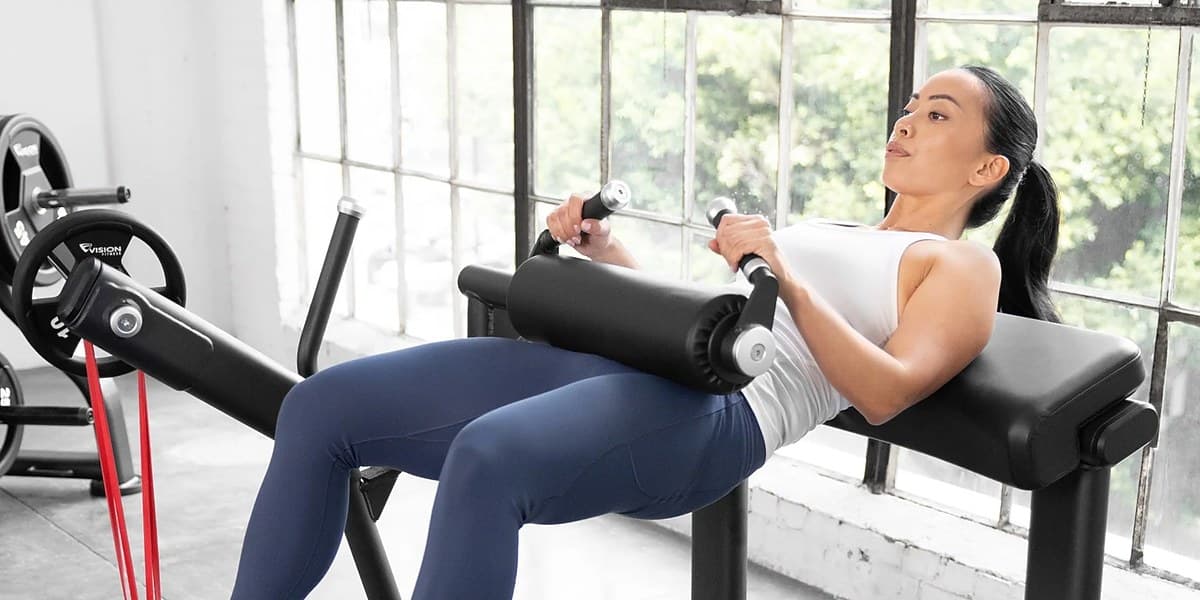
Woman performing a hip thrust on a glute drive machine
Movement ScreenGlutesStrength

Move Movement Screen: Are Your Glutes Actually Weak?

Daniel Ryan
Daniel Ryan
Senior Physiotherapist · Founder, Move Physiotherapy
11 Jun 2026 · 10 min read

“Weak glutes” is one of the most overused phrases in physiotherapy. Walk into any gym, scroll any fitness account, ask any personal trainer about your knee or back pain, and someone will tell you your glutes are weak. Most of the time, the diagnosis is delivered without a single objective test.

That is a problem. Some people genuinely do have weak glutes that need addressing. Other people are running around treating glutes that are working perfectly fine. The only way to know which category you fall into is to actually measure.

This is the first piece in our Move Movement Screen series. We're going to give you three home tests with the research-based norms, so you can find out for yourself. Then we'll explain why this matters more than most people realise — and what to do if you fall short.

Quick primer: which glute, and why

The glutes are not one muscle. They are three: gluteus maximus, gluteus medius, and gluteus minimus. For our purposes, we're focused on the first two.

The gluteus maximus is the largest muscle in the body. Its main job is hip extension — pushing the leg backward, driving the hips forward. It powers walking, running, squatting, climbing stairs, getting out of a chair. It is the prime mover for almost every functional lower body task.

The gluteus medius is smaller and sits on the side of the hip. Its main job is hip abduction (lifting the leg out to the side) and — more importantly — preventing the opposite side of the pelvis from dropping when you stand on one leg. Every time you take a step, the gluteus medius on the planted leg has to hold your pelvis level. This is its single most important function, and it is the function most commonly impaired.

Weakness in either muscle shows up differently. Maximus weakness shows up as poor power output — slow stair climbing, struggle getting out of a chair, reduced sprinting power. Medius weakness shows up as faulty mechanics — your knee falls inward when you squat, your hip drops when you run, your form breaks under fatigue.

The three tests

These tests target glute maximus endurance, glute medius endurance, and dynamic glute medius control. You'll need a stopwatch (your phone is fine), a clear floor, and a mirror or someone to watch you for the third test.

A note before we start: the published norms below come from studies on young adults, mostly university-age. If you are in your 40s, 50s, or beyond, your numbers will likely trend lower than these, and that is normal. Use the benchmarks as a target, not as a verdict.

Test 1: Single-leg glute bridge hold (gluteus maximus)
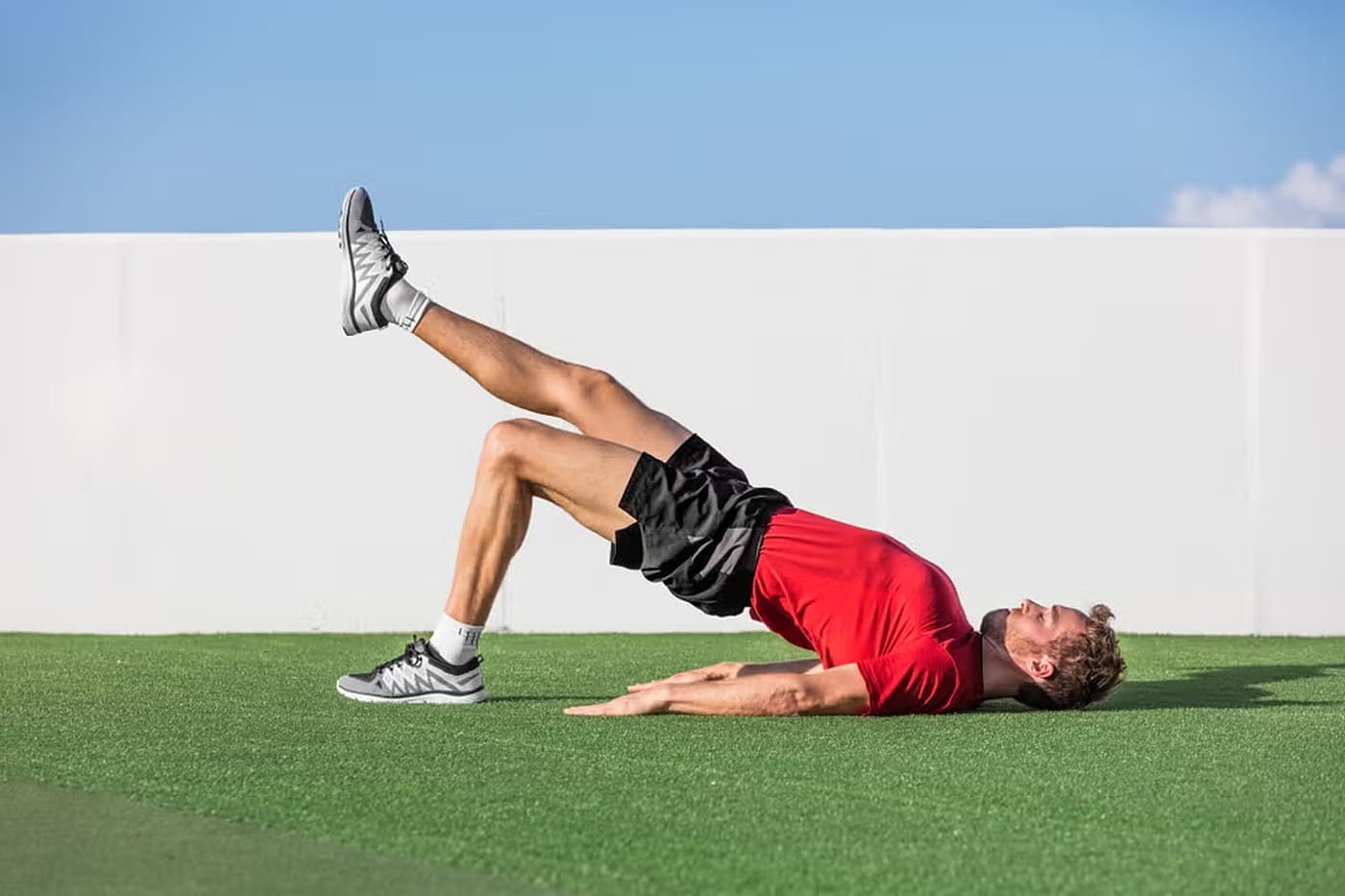
Single-leg glute bridge hold position

Lie on your back, knees bent to about 90 degrees, feet flat on the floor. Lift one leg off the ground and straighten it. Push through the heel of the planted foot and lift your hips until your body forms a straight line from shoulder to knee. Hold this position. Time how long you can maintain it before your hips drop or your form breaks down. Repeat on the other side.

The norm. A 2026 study in asymptomatic young adults found average hold times of approximately 65 seconds on the dominant leg and 64 seconds on the non-dominant leg.1 An earlier protocol (the Glute Endurance Measure–B) reported a mean of 81 seconds.2 In clinical practice, we use 60 seconds as a working benchmark — pragmatic rather than statistically perfect, but a fair line in the sand.

Passing looks like: at least 60 seconds each side, with less than 10 percent difference between sides.

Failing looks like: under 30 seconds, a large asymmetry between sides (more than 20 percent), or your hamstring cramping before your glute fatigues. The cramping hamstring is the giveaway — it's doing the work the glute should be doing.

Test 2 (Gold Standard): Side plank with leg lift (gluteus medius)
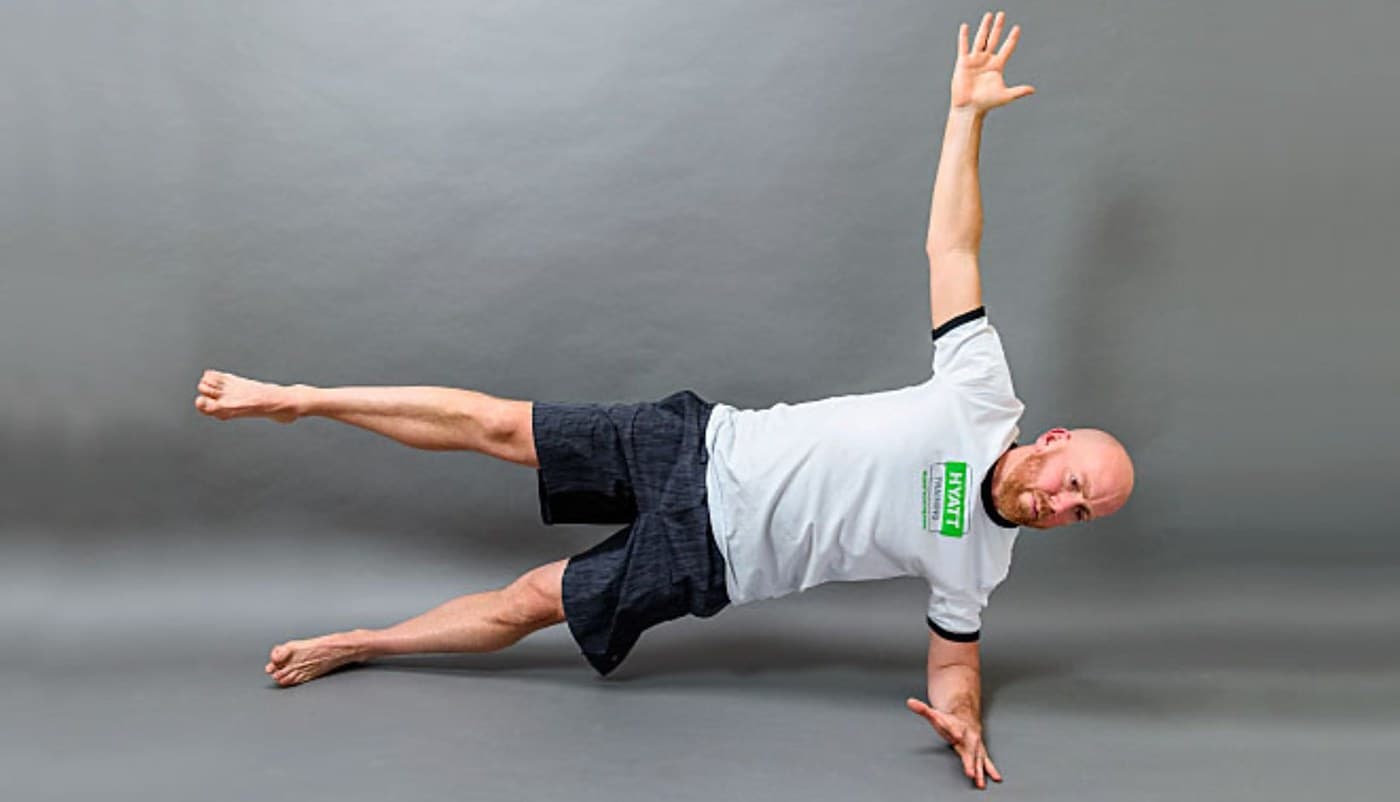
Side plank with top leg raised

This is the gold standard for isolating the gluteus medius. A 2011 EMG study by Boren and colleagues tested 18 common glute exercises and found that side plank with hip abduction produced the highest gluteus medius activation of any exercise measured — over 100 percent of maximum voluntary contraction.3 No other movement comes closer to a clean isolation challenge for the glute medius. If you want to know whether yours is actually doing its job, this is the test that asks the right question.

How to perform it. Lie on your side with your forearm beneath your shoulder (elbow at 90 degrees) and legs straight and stacked. Lift your hips off the floor so your body forms a straight line from shoulder to feet — that is the side plank position. From there, lift your top leg up to roughly 30 to 40 degrees of abduction, hold for a beat, then lower under control. Continue lifting and lowering at a steady cadence (about one rep every two seconds) for as long as you can hold the side plank. Repeat on the other side.

The norms. Direct population norms for the side plank with leg lift specifically are limited in the literature. For context, the closest reference point is the static side plank (no leg lift), where healthy young adults average around 94 seconds for men and 72 seconds for women.4 Adding the leg lift makes the test meaningfully harder. In clinical practice, we use 20 controlled reps each side as the working benchmark.

Passing looks like: at least 20 controlled reps each side, smooth tempo, hip held high throughout, with less than 10 percent difference between sides.

Failing looks like: under 10 reps before form breaks, the side plank sagging before the leg lift fails (a sign your lateral chain gives out before the glute does), the side or top of your hip burning before your glute (tensor fasciae latae compensation), or significant asymmetry between sides.

Test 3: Single-leg squat quality (dynamic hip control)

This is not a strength test. It is a control test. Stand on one leg in front of a mirror, or have someone film you from the front. Squat down as far as you can with control, then stand back up. Do five reps each side. Watch for four things:

  1. Knee valgus — does the knee fall inward, toward the midline?
  2. Pelvic drop — does the opposite side of the pelvis drop down?
  3. Trunk lean — do you lean over the squatting leg to keep balance?
  4. Heel rise — does your heel come off the floor?

A clean single-leg squat keeps the knee tracking over the second toe, the pelvis level, the trunk upright over the planted leg, and the heel grounded. Depth should approximately match your two-leg squat depth.

Failing looks like: any of the four faults appearing within the first few reps. Knee valgus and pelvic drop are the two most common, and both point at gluteus medius dynamic control deficits — even if your hold-time on Test 2 was fine. People can pass the strength tests and still fail the control test, and vice versa. Both pieces matter.
Added Bonus

Test your hamstrings too.

Single leg hamstring bridge endurance test position

The posterior chain is not just glutes. The hamstrings are the other half of the engine that drives hip extension, decelerates the leg in running, and protects the back. They are also the most commonly strained muscle group in running and field sports, with a high re-injury rate.

The single leg hamstring bridge endurance test was proposed by Freckleton and colleagues in 2014 as a screening tool for hamstring injury risk in AFL players, and it is now used widely in physiotherapy as a simple field measure of hamstring capacity.5

How to perform it. Lie on your back. Place one heel on a bench or box about 60 centimetres high, knee slightly bent (around 20 degrees). Lift the other leg with the knee bent to roughly 90 degrees and hold the lifted knee or cross your arms over your chest. Push down through the heel of the test leg and lift your hips off the floor until they fully extend, then lower under control. Each full lift counts as one rep. Continue at a steady cadence (about one rep every two seconds) until you can no longer maintain full range or your form breaks down. Repeat on the other side.

The norms. In Freckleton's original study of 482 AFL players, uninjured athletes consistently scored 26 or more reps per side; players who later sustained a hamstring strain had significantly lower preseason scores.5 A 2021 study of 201 soldiers found that a cutoff of 21 reps separated good from poor overall physical fitness.6 In professional male soccer players the average sits around 33 reps.

Working clinical benchmarks:

  • Under 20 reps: weak. Elevated hamstring injury risk if you play running or kicking sports.
  • 20 to 25 reps: functional but unremarkable.
  • 26 to 29 reps: healthy benchmark — matches Freckleton's uninjured AFL players.
  • 30 plus reps: strong. Consistent with athletic populations.

Asymmetry matters too. More than 10 percent difference between sides flags the weaker leg, regardless of total reps.

Caveat: these norms are drawn from male athletic populations (AFL, soccer, military). Female and older general-population norms are less well established. The Freckleton cutoff of 26 holds up as the strongest reference point because it is tied to actual injury outcomes, not just performance percentile.

Move Physiotherapy strength training

Got Your Results?

Now let's do something about them.

If you flagged a weakness on any of the three tests, start with an initial physiotherapy session at Move — we'll programme and progress the load that actually changes things. You can also get a VALD test to objectively measure your strength. No guessing. Actual numbers.

Why glute strength actually matters

The case for caring about this is not hype. It is in the literature.

Knee pain. Patellofemoral pain — “runner's knee” — is one of the most common knee complaints. It is mechanically linked to glute function. When the gluteus medius does not control the femur in the frontal plane, the knee falls into valgus, the patella tracks poorly, and pressure on the patellofemoral joint increases.7 A 2013 systematic review by Barton and colleagues found that hip strengthening reduces pain and improves function in patellofemoral pain syndrome.8

Lower back pain. Adults with chronic low back pain consistently show weaker hip abductors, adductors, and extensors than healthy controls — differences in the order of 15 to 30 percent.9 The gluteus maximus is a key synergist for lumbar extension. When it underperforms, the lumbar erectors carry more load than they should. Over time, that load shows up as pain.

Running injuries. Beyond runner's knee, gluteus medius dysfunction has been linked to ITB syndrome and Achilles tendinopathy. A 2016 systematic review found moderate evidence that gluteus medius activity is reduced in runners with patellofemoral pain.10 The cascade is consistent — when the hip cannot stabilise, force gets dumped into the structures further down the chain.

Ageing well. Hip extensor strength predicts gait speed, falls risk, and the ability to recover from a stumble in older adults. Gluteus maximus is the engine that gets you out of a chair. Lose it, and independence narrows quickly.

So when someone tells you weak glutes can cause knee, back, hip, or running pain, they are not making it up. But the diagnosis is only useful if it is actually true for you. The tests above let you find out.

What if you failed?

The good news: the glutes respond fast. Within weeks of consistent loading, both strength and motor control improve measurably. The less good news: most people training their glutes are not doing it productively.

The common mistakes we see:

  • Banded clamshells and side-leg raises forever, never progressing to actual load.
  • Bilateral glute bridges as the main strength exercise. The bilateral version splits load between two legs and rarely gets progressed beyond bodyweight — which is a significant underload of what is actually required to build genuine glute strength.
  • “Activation” warm-up drills that never get followed by genuine loading.
  • Isolated glute work that never integrates into the movements that matter — squats, deadlifts, lunges, step-ups.

What works is progressive resistance — actual weight — applied through patterns that load the hip in extension and abduction, with technique that prioritises the glute over compensatory muscles like the hamstrings and tensor fasciae latae. The EMG evidence on this is consistent.11 The exercises that genuinely activate the glutes most are single-leg squat variations, side-lying hip abduction with load, and bridge variations performed with attention to form.

Train with us at Move

This is where we can help. At Move Physiotherapy, we run physiotherapy-led strength training across our three clinics in Beeliar, Booragoon, and East Fremantle. One on one, or in small groups. The point of working with a physio rather than a personal trainer is that the assessment piece is real — we test the strength, watch the movement, identify the gaps, and build a program that targets them.

For glutes specifically, that means teaching the movements properly so the glute is doing the work — not the hamstring or the TFL — building intensity at the right rate so you actually get stronger, and integrating the work into the patterns that matter in everyday life. The aim is not to spend forever on activation drills. It is to get the glutes strong enough to hold up under load in the real world, and to prevent the pesky knee, hip, and back injuries that creep in when they don't.

If the tests above flagged something — or if you've been dealing with knee, hip, or back pain that hasn't shifted with the usual approaches — book in.

Next in the series: ankle mobility. The simplest physio test in existence, why most people fail it, and what to do about it.

Daniel Ryan
Daniel Ryan
Senior Physiotherapist · Founder, Move Physiotherapy & Fitness

Masters of Physiotherapy, University of South Australia. Founded Move Physiotherapy in 2018 across Beeliar, Booragoon and East Fremantle.

References

  1. Worst LE, Henderson DK. Establishing Normative Values and Clinician Assessment Accuracy for the Single Leg Bridge Endurance Test. Int J Sports Phys Ther. 2026.
  2. Lehecka BJ, Edwards M, Haverkamp R, et al. Building a better gluteal bridge: electromyographic analysis of hip muscle activity during modified single-leg bridges. Int J Sports Phys Ther. 2017;12(4):543–549.
  3. Boren K, Conrey C, Le Coguic J, Paprocki L, Voight M, Robinson TK. Electromyographic analysis of gluteus medius and gluteus maximus during rehabilitation exercises. Int J Sports Phys Ther. 2011;6(3):206–223.
  4. Schmitz RJ, Russo K, Edwards L, Noehren B. Anatomical factors contributing to hip abductor weakness in females with patellofemoral pain syndrome. J Orthop Sports Phys Ther. 2014;44(7):528–536.
  5. Freckleton G, Cook J, Pizzari T. The predictive validity of a single leg bridge test for hamstring injuries in Australian Rules Football Players. Br J Sports Med. 2014;48(8):713–717.
  6. Pori P, Mahnič N, Relić P, et al. Predictive Validity of the Single Leg Hamstring Bridge Test in Military Settings. Appl Sci. 2021;11(4):1822.
  7. Powers CM. The influence of abnormal hip mechanics on knee injury: a biomechanical perspective. J Orthop Sports Phys Ther. 2010;40(2):42–51.
  8. Barton CJ, Lack S, Malliaras P, Morrissey D. Gluteal muscle activity and patellofemoral pain syndrome: a systematic review. Br J Sports Med. 2013;47(4):207–214.
  9. Cooper NA, Scavo KM, Strickland KJ, et al. Prevalence of gluteus medius weakness in people with chronic low back pain compared to healthy controls. Eur Spine J. 2016;25(4):1258–1265.
  10. Semciw AI, Neate R, Pizzari T. A comparison of running related gluteus medius function in health and injury: a systematic review with meta-analysis. J Electromyogr Kinesiol. 2016;31:115–123.
  11. Distefano LJ, Blackburn JT, Marshall SW, Padua DA. Gluteal muscle activation during common therapeutic exercises. J Orthop Sports Phys Ther. 2009;39(7):532–540.

Train with us

Physiotherapy-led strength training across Beeliar, Booragoon and East Fremantle.

Book OnlineMore Articles →