HomeAbout
Services
General PhysiotherapySports PhysiotherapyExercise RehabilitationDry NeedlingRemedial Massage
ConditionsFeesContact
Book OnlineCall 08 6113 8062
Collagen protein supplement powder
Tendon RehabilitationSports NutritionEvidence-Based Practice

Collagen Supplementation for Tendon Injuries: What the Evidence Actually Shows

Daniel Ryan
Daniel Ryan
Senior Physiotherapist · Move Physiotherapy
15 April 2026 · 10 min read

At Move Physiotherapy, we recommend collagen supplementation to patients managing tendon injuries. I want to be transparent about why — and that means being honest about what the evidence actually shows, rather than overstating it.

The short version: the structural evidence is more compelling than most people give it credit for — but the clinical outcome data is still catching up. Add in the broader benefits of adequate protein intake, and the recommendation stands on solid ground even where the tendon-specific research remains incomplete.

Here is what I know, what I'm uncertain about, and what I tell my patients.

First: the most important part of tendon recovery is progressive loading

Before discussing supplementation at all, this needs to be said clearly: no supplement replaces a properly structured resistance training program. The primary driver of tendon adaptation is mechanical load. Full stop.

The research is consistent on load intensity: a systematic review by Bohm et al. established that the threshold likely to produce adaptations in tendon mechanical properties — stiffness, material properties, and morphology — is approximately 70% of maximum, and this appears to hold regardless of whether the contraction type is isometric or isotonic.13 For isometric protocols specifically — often used in the early pain management phase of patellar tendinopathy — 70–80% of MVC is the target range used in the majority of well-designed clinical trials.14

Heavy slow resistance (HSR) training — slow, controlled repetitions at 70–90% of 1RM — is the most evidence-supported loading approach for established tendinopathy and has been shown to be superior to eccentric-only protocols in long-term outcomes for both Achilles and patellar tendinopathy.14 The "heavy" part is not incidental — it is the mechanism.

The hierarchy is clear

Progressive, heavy resistance training at ≥70% of maximum is the non-negotiable foundation of tendon rehabilitation. Collagen supplementation is an adjunct that may support that process — it does not substitute for it. Supplementing without loading is unlikely to produce meaningful tendon adaptation.

We will be publishing more detailed guidance on tendon loading protocols — covering exercise selection, load progression, and return-to-sport criteria — in a forthcoming article. For now, the point stands: if you are taking collagen and not doing progressive resistance training, you are missing the most important part.

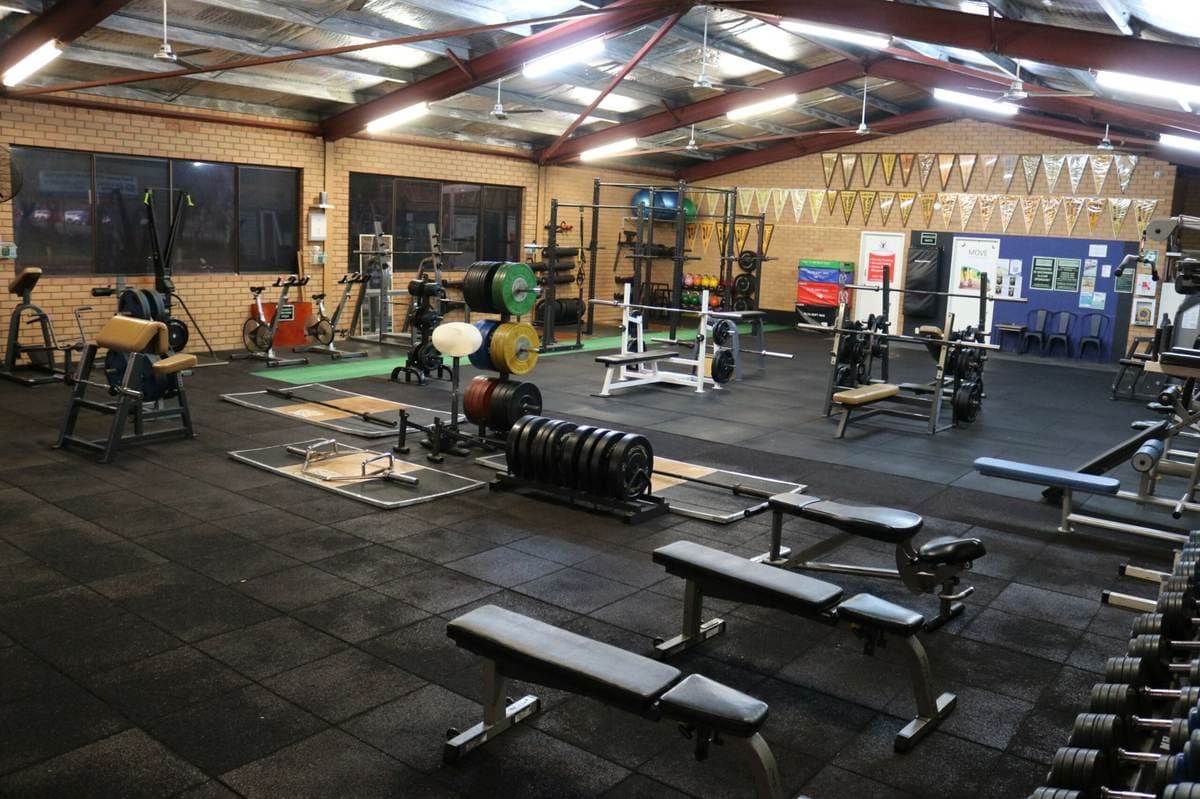
Move Physiotherapy East Fremantle exercise rehabilitation

Exercise Rehabilitation · East Fremantle

Progressive loading programs at our East Fremantle clinic

Fully equipped gym, VALD force plate and dynamometry testing, and evidence-based tendon rehabilitation programs — all under one roof.

Exercise Rehab →Book Online

Why collagen matters for tendons specifically

Tendons are not like muscle. They have limited vascularity, slow metabolic turnover, and a limited capacity to remodel once damaged. Collagen — specifically type I collagen — makes up approximately 65–80% of a tendon's dry weight, forming the structural matrix that allows the tendon to transmit force from muscle to bone under load.11

When tendon pathology develops — whether patellar tendinopathy, Achilles tendinopathy, or a partial tear — what we're dealing with is a disruption to this collagen matrix. The tendon tissue becomes disorganised, the collagen cross-links degrade, and the structure loses stiffness and mechanical integrity. The question collagen supplementation tries to answer is: can we provide the raw material to support rebuilding that matrix during rehabilitation?

The amino acid profile of collagen — particularly glycine, proline, and hydroxyproline — is unique among proteins. These are the building blocks of the collagen helix and are not found in meaningful quantities in most dietary protein sources.8 The theoretical rationale for supplementation is therefore specific: you're not just adding protein, you're providing substrate that other protein sources don't supply.

What the research shows — and where it's limited

The foundational study in this space was Shaw et al. (2017), which demonstrated that vitamin C-enriched gelatin taken before intermittent exercise significantly increased collagen synthesis markers compared to placebo.1 This was an important proof-of-concept — it showed that oral collagen supplementation could influence tendon biology, not just gut absorption.

Since then, the structural evidence has strengthened. A 2025 systematic review of eight high-quality RCTs found strong evidence — classified as GRADE A — for increases in tendon cross-sectional area and stiffness with collagen supplementation at 15–30g per day combined with resistance training.3 A 2024 meta-analysis similarly found statistically significant improvements in tendon morphology (SMD 0.67, p<0.01) — though with very low certainty of evidence, reflecting the small sample sizes across most included studies.2

Specifically for patellar tendinopathy, Jerger et al. (2023) found that collagen peptides significantly increased patellar tendon cross-sectional area adaptation following 14 weeks of high-load resistance training compared to placebo.4 For Achilles tendinopathy, Praet et al. (2019) found that collagen supplementation combined with calf-strengthening exercises improved function and reduced pain compared to exercise alone.5

Where the evidence falls short

  • Most studies are small — the 2025 systematic review included only 257 participants across 8 RCTs.3
  • Female participants are significantly underrepresented — most studies are 90%+ male, limiting generalisability.
  • There is GRADE A evidence against collagen supplementation having any effect on muscle strength — explained in detail below.
  • Low-dose products (<10g) largely show no significant between-group effects — most positive findings are in the 15–30g range.

What collagen does not do: muscle strength and hypertrophy

This is worth understanding in detail because it explains something that confuses a lot of patients: why we recommend collagen in tendon rehabilitation while also saying you still need to hit your total protein targets from other sources.

The 2025 systematic review found GRADE A evidence — strong evidence — against collagen supplementation having any meaningful effect on muscle strength.3 Across all the included RCTs, both the collagen and placebo groups improved in strength (because both groups were training), but there was no additional benefit attributable to the collagen itself.

The reason for this is structural. Muscle hypertrophy and force production are driven primarily by myofibrillar protein synthesis — the rebuilding of actin and myosin filaments within the muscle fibres. This process requires essential amino acids, particularly leucine, to trigger the anabolic signalling cascade (specifically, mTOR activation). Collagen is deficient in leucine and contains no tryptophan — making it a low-quality protein by conventional muscle-building standards.

What collagen is rich in — glycine, proline, hydroxyproline — are exactly the building blocks of the extracellular matrix and connective tissue. This is why it appears to support tendon adaptation without meaningfully contributing to muscle adaptation. The two tissues have fundamentally different substrate requirements, and collagen addresses one without the other. For patients in tendon rehabilitation, this means collagen supplementation is a connective tissue adjunct — not a protein shake, and not a replacement for total daily protein from complete protein sources.

The Vitamin C connection — and why timing matters

One of the most consistent findings across the better-quality studies is that collagen supplementation without vitamin C appears to be significantly less effective. Vitamin C plays an essential role in the hydroxylation of proline and lysine — the process by which collagen precursors are converted into the stable triple-helix structure.9 Without adequate vitamin C, the amino acids provided by collagen supplementation cannot be properly incorporated into functional collagen.

The Shaw et al. protocol used vitamin C-enriched gelatin taken approximately one hour before exercise.1 The hypothesis is that exercise-induced mechanical loading creates a collagen synthesis signal in the tendon, and the elevated amino acid availability from the pre-exercise supplement is there to support that signal at the right time. Taking a collagen supplement at a random time of day, without vitamin C, and without exercise context, is likely far less effective than the clinical protocols that produced positive results.

Dose — and why most off-the-shelf products probably don't have enough

The studies showing significant structural improvements in tendons have generally used 15–30g per day of hydrolysed collagen, taken with vitamin C, in the context of structured resistance training.3

Many collagen products on the market contain 5–10g per serve and are marketed primarily for skin and hair. Studies using these lower doses have shown only within-group effects — meaning both the collagen and placebo groups improved because both were exercising, but there was no significant between-group difference attributable to the supplement itself. If you're supplementing for tendon rehabilitation, the dose needs to match what the research has actually tested.


Move Physiotherapy sports rehabilitation

Tendon Rehabilitation

Managing a tendon injury?

Patellar, Achilles, and upper limb tendinopathy assessed with objective VALD testing. Progressive loading programs, not just rest and ice.

Book an Appointment →

Why we still recommend it

Given the limitations I've described, the obvious question is: why recommend it at all? There are three reasons.

First, the structural evidence is genuinely the most promising nutritional intervention we have specifically for tendon tissue. Exercise is the primary treatment for tendinopathy — it's not optional — but beyond loading protocols, there is very little else with meaningful structural evidence. Collagen supplementation at the right dose is the exception.12

Second, the broader protein benefits are independently valuable. Many patients managing tendon injuries are also in a resistance training program — as they should be. Adequate total protein intake is essential for muscle adaptation, and overall protein requirements in people doing structured rehabilitation are often higher than what they're consuming. A collagen supplement adds meaningful daily protein even if the tendon-specific effects are only partial.

Third, the risk-to-benefit ratio is strongly in favour of supplementation. Hydrolysed collagen is food-derived, well-tolerated, widely available, and inexpensive relative to most intervention costs in rehabilitation. The downside of recommending it when the evidence is uncertain is low. That said, I'm careful not to position it as a treatment in itself. The evidence is clear that collagen supplementation without concurrent loading exercise does not produce the same structural benefits.3

The protocol we use in clinic

15–30g
Dose
Hydrolysed collagen peptides per day. Higher end for acute tendinopathy or post-surgical rehab.
50mg+
Vitamin C
Taken alongside the collagen. Important for collagen cross-linking. A basic supplement will cover this.
30–60 min
Timing
Before your rehabilitation exercise or loading session. Pre-exercise timing has stronger evidence than post-exercise.
8–12 wks
Duration
Minimum timeframe to expect structural changes. Tendon remodelling is slow — consistency is required.

One important note: collagen is not a complete protein. It contains virtually no tryptophan and has a poor essential amino acid profile compared to whey or other animal proteins. This means it should be taken alongside your regular dietary protein, not instead of it. Think of it as a targeted connective tissue supplement, not a primary protein source.

For most of my patients with tendinopathy, that means a morning routine of collagen plus vitamin C, mixed in water or juice, 30–60 minutes before their exercise session. It takes 90 seconds and the cost is negligible relative to the rest of the rehabilitation program.

The honest bottom line

Collagen supplementation for tendons is in a similar position to many sports nutrition interventions: the mechanistic rationale is sound, the structural evidence is promising, and the clinical outcome evidence is building but not yet definitive. The 2025 research landscape is more supportive than it was five years ago, and the trajectory is in the right direction.

I recommend it because the evidence justifies it — with the caveats of adequate dose, vitamin C co-supplementation, pre-exercise timing, and concurrent loading. I don't recommend it as a standalone intervention, and I'm clear with patients that it supports their rehabilitation program, it doesn't replace it.

As the evidence develops — and the larger clinical trials currently underway report their results — I'll update this recommendation accordingly. That's how evidence-based practice is supposed to work.

Daniel Ryan
Daniel Ryan
Senior Physiotherapist · Founder, Move Physiotherapy & Fitness

Masters of Physiotherapy, University of South Australia. Founded Move Physiotherapy in 2018. Provides match day services to sporting clubs across Perth, with a focus on evidence-based rehabilitation and objective return-to-sport testing.

References

  1. Shaw G, Lee-Barthel A, Ross ML, Wang B, Baar K. Vitamin C-enriched gelatin supplementation before intermittent activity augments collagen synthesis. Am J Clin Nutr. 2017;105(1):136–143.
  2. Bischof K, Moitzi AM, Stafilidis S, König D. Impact of Collagen Peptide Supplementation in Combination with Long-Term Physical Training on Strength, Musculotendinous Remodeling, Functional Recovery, and Body Composition in Healthy Adults: A Systematic Review with Meta-analysis. Sports Med. 2024;54(11):2865–2888.
  3. Buell JL, Franks R, Bhullar S, et al. Collagen Supplementation on Tendon-Related Structural and Performance Outcomes: A Systematic Review. J Funct Morphol Kinesiol. 2025;11(1):130.
  4. Jerger S, Centner C, Lauber B, Seynnes O, Friedrich T, et al. Specific collagen peptides increase adaptations of patellar tendon morphology following 14 weeks of high-load resistance training: A randomized-controlled trial. Eur J Sport Sci. 2023;23(12):2329–2339.
  5. Praet SFE, Purdam CR, Welvaert M, et al. Oral Supplementation of Specific Collagen Peptides Combined with Calf-Strengthening Exercises Enhances Function and Reduces Pain in Achilles Tendinopathy Patients. Nutrients. 2019;11(1):76.
  6. Kirmse M, Hein V, Schäfer R, Platen P. Collagen Peptide Supplementation and Musculoskeletal Performance: A Systematic Review and Meta-Analysis. Dtsch Z Sportmed. 2024;75:179–188.
  7. Dressler P, Gehring D, Zdzieblik D, Oesser S, Gollhofer A, König D. Improvement of Functional Ankle Properties Following Supplementation with Specific Collagen Peptides in Athletes with Chronic Ankle Instability. J Sports Sci Med. 2018;17(2):298–304.
  8. de Paz-Lugo P, Lupiáñez JA, Meléndez-Hevia E. High glycine concentration increases collagen synthesis by articular chondrocytes in vitro: acute glycine deficiency could be an important cause of osteoarthritis. Amino Acids. 2018;50(10):1357–1365.
  9. Paxton JZ, Grover LM, Baar K. Engineering an in vitro model of a functional ligament from bone to bone. Tissue Eng Part A. 2010;16(11):3515–3525.
  10. Aussieker T, Hilkens L, Holwerda AM, et al. Collagen Protein Ingestion during Recovery from Exercise Does Not Increase Muscle Connective Protein Synthesis Rates. Med Sci Sports Exerc. 2023;55(10):1792–1802.
  11. Kjaer M, Langberg H, Heinemeier K, et al. From mechanical loading to collagen synthesis, structural changes and function in human tendon. Scand J Med Sci Sports. 2009;19(4):500–510.
  12. Baar K. Minimising Injury and Maximising Return to Play: Lessons from Engineered Ligaments. Sports Med. 2017;47(Suppl 1):5–11.
  13. Bohm S, Mersmann F, Arampatzis A. Human tendon adaptation in response to mechanical loading: a systematic review and meta-analysis of exercise intervention studies on healthy adults. Sports Med Open. 2015;1(1):7.
  14. Beyer R, Kongsgaard M, Hougs Kjær B, Øhlenschlæger T, Kjær M, Magnusson SP. Heavy Slow Resistance Versus Eccentric Training as Treatment for Achilles Tendinopathy: A Randomized Controlled Trial. Am J Sports Med. 2015;43(7):1704–1711.

Managing a tendon injury?

Evidence-based tendon rehabilitation across Beeliar, Booragoon and East Fremantle.

Book OnlineMore Articles →